

Spiritual Formation
Ancient monasticism
meets modern realities
Being at the hilltop stretches you: it leaves little room for the important, quiet but transcendent questions.
You sense its importance. That something at the core of your being needs to be nurtured for the sake of your relationships and beyond. Neglect it, and even wins feel hollow.
Spiritual formation is the process of being transformed for the sake of yourself and others as you draw closer to God.
It carves out protected space to explore life’s most meaningful questions and how to navigate them.
Seeking this isn’t weakness: it’s wisdom. The strongest stewards guard their souls fiercely.
Spiritual Direction is the ancient formation pathway. Rooted in the early monastic and contemplative Christian tradition.
It is both pragmatic and profound, challenging and enriching. For 2,000 years it has provided personal support to monarchs, clergy, artists, merchants, and intellectuals.
And every saint, from Francis to Felicity, have been on this journey. Most of whose stories begin in chaos.
Our approach marries the pedigree of this ancient wisdom with contemporary excellence. Think of it as access to the insights and benefits of a personal retreat but in real time.
You don’t need a faith to benefit. If you have one, great; if not, you will find this benefits you, too.
How does it work?
Typically, via regular 60 minute sessions. We work on a pattern of regularity that suits your particular level of capacity and concern.
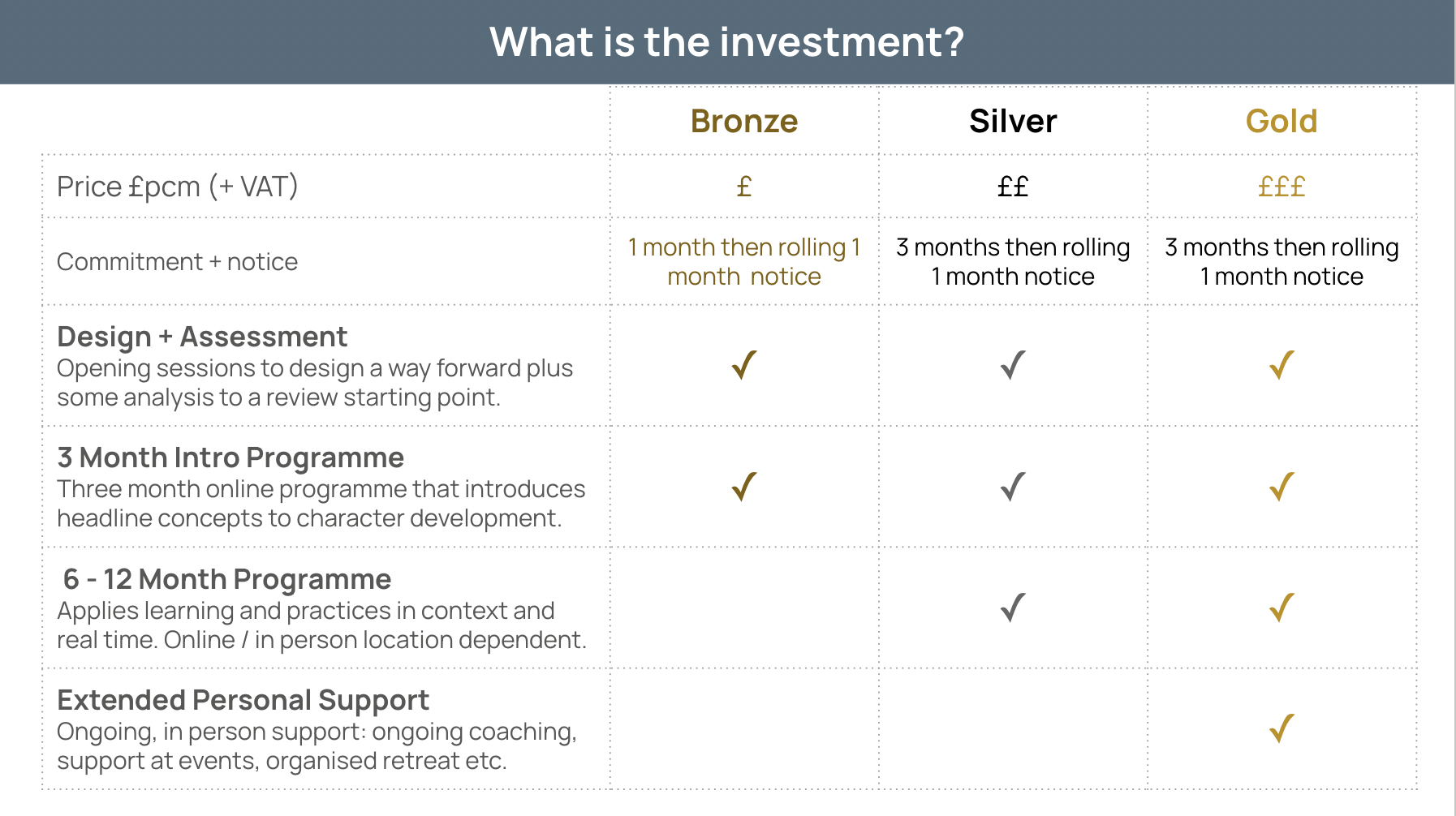
The cost structure is similar to our other support packages. It will depend on the regularity and structure of the process.
What topics do you cover?
Spiritual formation is more akin to a process of reflection and discernment than a programmatic course.
However, we can create a framework to help structure your experience, particularly if you are new to this.
Does it matter if you don’t have a faith?
No. This isn’t about belief systems of theologies. The goal is to stay above that and focus the attention on your spiritual journey, not an intellectual or informational one. Which is also why a spiritual director can work with people across the denominations who hold different views.